Sustainability can mean many things for a business. Reducing waste, sourcing ingredients responsibly, lowering environmental impacts, and supporting healthier communities can all be part of the conversation.
But there is another piece of sustainability that businesses, especially those connected to food and agriculture, shouldn’t overlook: pollinators.
Bees and other pollinators are part of the ecosystems and agricultural systems businesses rely on every day. Supporting their health allows companies to invest in biodiversity, agriculture, and more resilient landscapes while showing employees and customers what their sustainability commitments look like in action.
Pollinators Are Connected to Our Food System
According to the USDA, about 35% of the world’s food crops depend on animal pollinators to reproduce.
Honey bees are particularly important to commercial agriculture because managed colonies can be moved where large numbers of pollinators are needed during a crop’s bloom. Native bees and other pollinators also contribute to agriculture and healthy ecosystems.
For businesses involved in food, beverages, agriculture, grocery, natural products, and related industries, this creates a direct connection between pollinator health and the systems behind many of the products they sell.
But even businesses outside these industries can have a stake in protecting the biodiversity and ecosystems that support our communities.
Healthy Pollinators Need Healthy Landscapes
Supporting bees isn’t simply about putting more hives on the landscape.
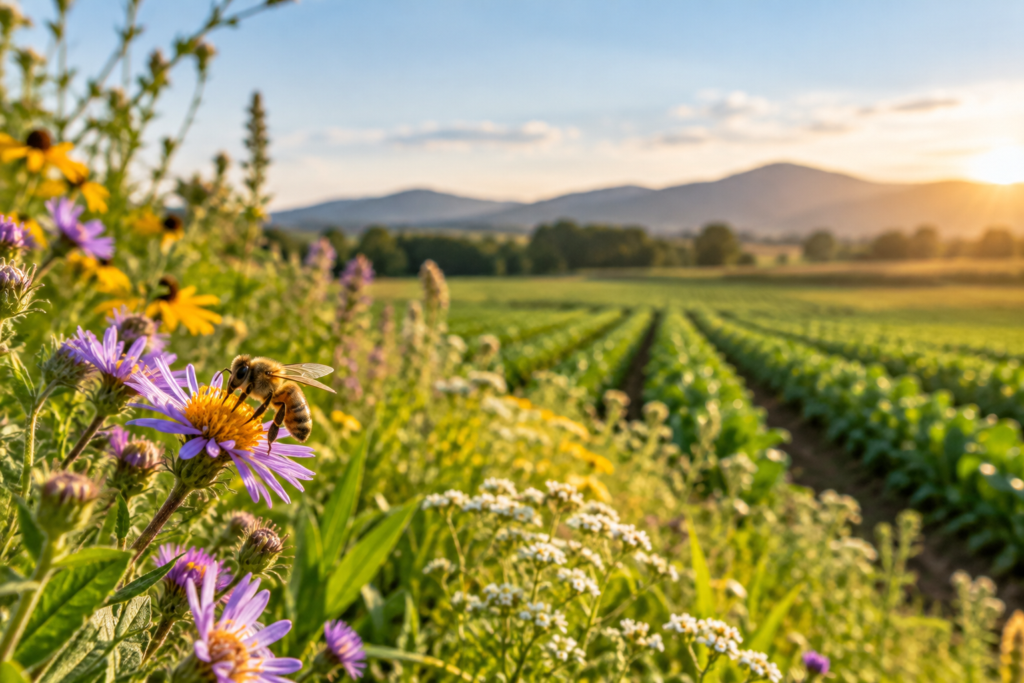
Pollinators need access to diverse sources of nutrition and suitable habitat throughout the seasons. Creating and restoring habitat can provide bees and other pollinators with places to forage, nest, and thrive.
These efforts can also fit into a broader approach to regenerative agriculture, which looks beyond individual crops to the health and resilience of the agricultural ecosystem.
For businesses developing sustainability initiatives, pollinator conservation offers a tangible way to connect environmental goals with agriculture and biodiversity.
Research Helps Build Long-Term Solutions
Habitat is one part of the picture. Research is another.
Understanding why colonies struggle and identifying ways to improve bee health and resilience requires continued scientific research.
Save the Bee has funded research through Oregon State University’s Honey Bee Lab, supporting scientific work focused on honey bee health and the challenges affecting colony survival. Supporting this type of research can help move the conversation beyond recognizing the challenges pollinators face and toward developing practical solutions.
For companies looking to support environmental causes, the opportunity isn’t only to raise awareness. It’s also a chance to invest in work that addresses the challenges pollinators face.
Sustainability Can Engage Employees and Customers
Corporate sustainability efforts can also create opportunities to bring more people into the mission.
Save the Bee’s corporate partnerships provide several ways for businesses to get involved, from employee engagement and cause-marketing initiatives to sponsorships and custom campaigns.
These types of partnerships can give employees opportunities to participate while helping customers better understand the connection between pollinators, agriculture, and healthy ecosystems.
They can also help businesses demonstrate that their environmental commitments extend beyond their own operations and into the communities and ecosystems around them.
Make Pollinators Part of Your Sustainability Efforts
Protecting pollinators is about more than protecting an individual species. It’s about supporting agriculture, biodiversity, and healthy landscapes that people and businesses depend on.
At Save the Bee, we work to advance bee health research, support pollinator habitat, and partner with growers and communities to create practical solutions for pollinators.
Corporate partners can play an important role in advancing that work.
Explore Save the Bee’s corporate partnership opportunities to learn how your organization can support pollinator conservation while engaging employees and customers.