When you hear the term regenerative agriculture, you might think about healthier soil, environmentally friendly farming, or growing food more sustainably. But there’s another important part of the conversation that often gets overlooked: bees.
Bees and other pollinators play an essential role in agriculture, helping many plants produce the fruits, vegetables, nuts, and seeds we depend on. At the same time, the way we manage farmland can directly affect the health of these pollinators.
That’s where regenerative agriculture comes in. By creating healthier, more diverse agricultural landscapes, farmers can support both the land they grow on and the pollinators that help make food production possible.
What Is Regenerative Agriculture?
Regenerative agriculture is an approach to farming that focuses on improving the health of the land rather than simply maintaining its current condition. The goal is to create more resilient agricultural systems by supporting healthy soil, biodiversity, water conservation, and natural ecological processes.
Common regenerative farming practices include planting cover crops, rotating crops, reducing soil disturbance, and maintaining diverse plant life. According to the USDA Natural Resources Conservation Service, practices such as cover cropping and diverse crop rotations can improve soil health while also benefiting wildlife and pollinators. Although regenerative agriculture is often discussed in terms of soil health, its benefits can extend well beyond what happens underground.
Healthier Farms Can Provide Better Nutrition for Bees
Just like humans, bees need access to nutritious food to stay healthy. Honey bees collect nectar and pollen from flowering plants, and access to different pollen sources helps them get important nutrients.
However, agricultural landscapes with limited plant diversity may not provide enough variety throughout the growing season. When large areas contain only one flowering crop, bees may have abundant food for a short period but fewer options once those flowers disappear.
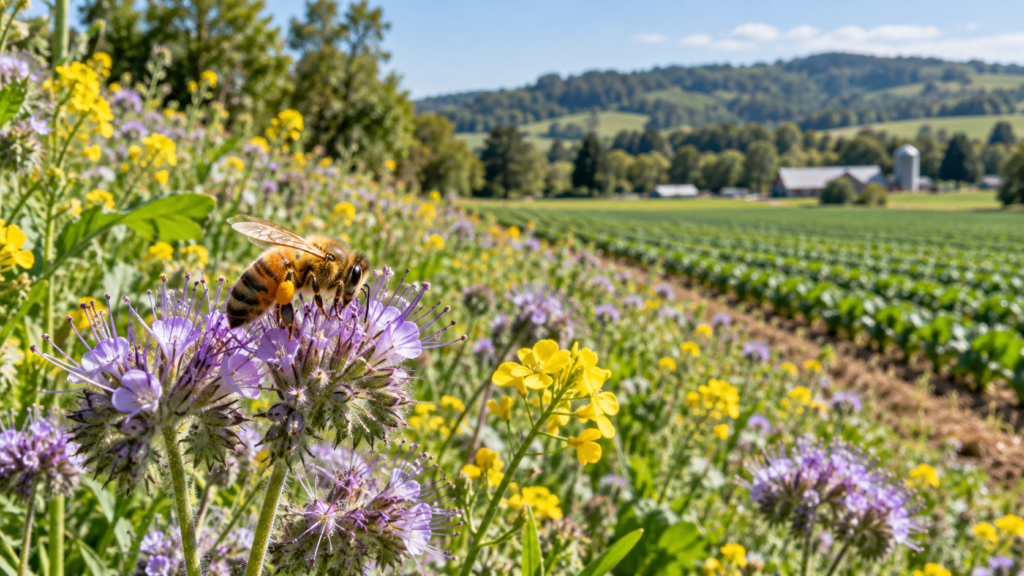
Regenerative farming practices can help address this challenge by encouraging more diverse vegetation. Planting cover crops that are allowed to flower, maintaining hedgerows, and restoring native wildflowers can provide additional food sources for honey bees and native pollinators.
The types of plants and their blooming periods matter, too. A landscape with flowers blooming throughout spring, summer, and fall can offer more consistent nutrition than one that provides food for only a few weeks.
Regenerative Farming Can Help Reduce Environmental Stressors
Nutrition isn’t the only factor affecting bee health. Habitat loss, pesticide exposure, parasites, and disease can also create challenges for pollinators.
Some regenerative agricultural practices encourage farmers to work more closely with natural ecosystems. For example, improving plant diversity can help support beneficial insects, while integrated pest management strategies can reduce unnecessary pesticide applications.
Planting cover crops can also help protect soil from erosion, improve water infiltration, and support biodiversity. When flowering species are included, they may provide additional resources for pollinators.
These practices don’t eliminate every threat bees face, but they can help create healthier agricultural environments where pollinators have a better opportunity to thrive.
Why This Matters for Our Food Supply
Regenerative agriculture reminds us that healthy food systems depend on the relationships between soil, plants, insects, and the surrounding environment. By protecting these connections, we can help create agricultural systems that support both pollinators and the people who depend on them.
The benefits extend to businesses, too. Companies involved in food production, agriculture, natural products, and other sustainability-focused industries have a connection to the health of our agricultural systems. Supporting pollinator conservation gives these businesses an opportunity to contribute to healthier ecosystems while demonstrating their commitment to more sustainable food production.
For a closer look at why pollinators deserve more attention in sustainable farming discussions, explore our article on The Missing Piece of Regenerative Agriculture.
Supporting Healthy Bees and Sustainable Agriculture
Creating a healthier future for bees takes more than individual changes on farms. It requires continued research, habitat restoration, education, and collaboration between farmers, businesses, and communities.
At Save the Bee, we support bee health research, pollinator habitat restoration, and education that encourage more sustainable agricultural practices. Whether you’re an individual who cares about the food on your table or a business committed to sustainability, you can help create healthier environments for pollinators and a more resilient food supply.
Support our mission or explore our corporate partnership opportunities to help build a healthier future for bees, agriculture, and all of us.