Dear Friend of the Bee,
I’m a coffee guy.
Some mornings, if I’m being honest, coffee is breakfast.
I drink it black, usually from an insulated French press that follows me outside each morning. Before the emails start. Before the meetings. Before the day begins pulling me in a dozen directions.
It’s one of my favorite parts of the day.
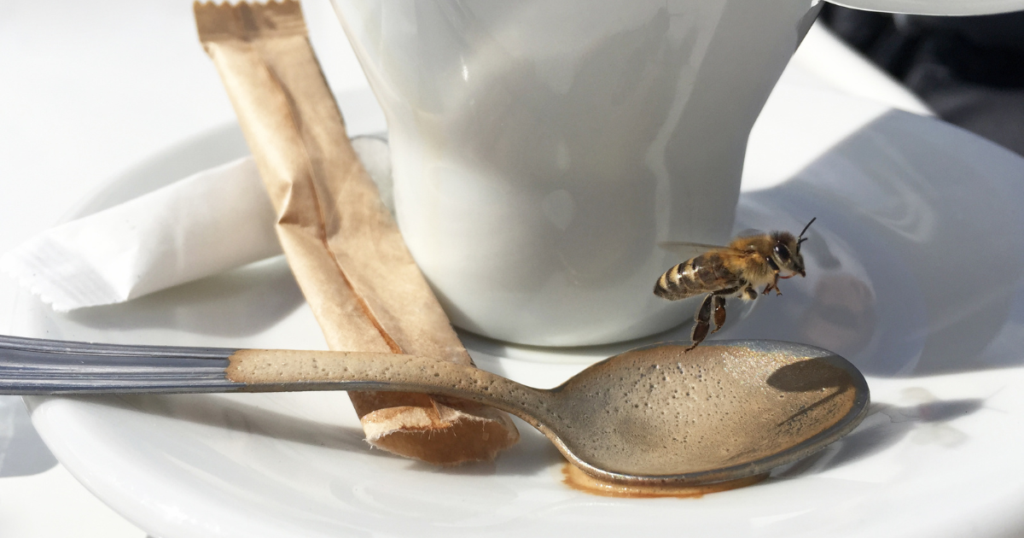
Just me, a cup of coffee, the garden, and whatever the bees are up to.
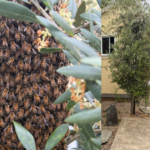
This time of year, when the weather is warm, the hive is already buzzing with activity by the time I sit down. Foragers are coming and going. Guard bees patrol the entrance. Thousands of tiny jobs are underway before most of us have finished our first cup.
In the winter, it’s different.
You’ll only see a handful of bees clustered near the entrance, part of the colony’s first line of defense and a critical piece of how the hive regulates temperature and moisture through the colder months.
But whether it’s July or January, I find myself watching them while I drink my coffee.
And recently it got me thinking about breakfast.
Not my breakfast.
Everyone’s breakfast.
Because while most of us know bees help produce honey, far fewer realize how much of what we eat each morning depends on pollinators.
- The berries in your yogurt.
- The almonds in your granola.
- The avocado on your toast.
- The melon on your fruit plate.
- Even the coffee in my cup has a pollinator story behind it.
Coffee plants can self-pollinate, but research has shown that pollinators improve yields and fruit quality. In many coffee-growing regions around the world, bees play an important role in helping farmers produce the crop that fuels millions of mornings, including mine.
And coffee is just the beginning.
Pollinators touch countless foods we often take for granted. Fruits, vegetables, nuts, herbs, and seeds all depend, at least in part, on the work of bees and other pollinators moving from flower to flower.
Most of us never see that work happening.
We see the grocery cart. The farmers market. The breakfast table. We don’t always see the flower that came first.
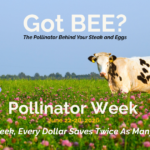
That’s one of the reasons Pollinator Week matters.
Over the coming week, Save the Bee will be visiting businesses throughout our community with our observation hive, helping people get an up-close look at pollinators and the vital role they play in our lives. We’ll be partnering with local businesses, talking with families, answering questions, and helping people make the connection between the bees they see behind glass and the food they enjoy every day.
It’s a simple connection. But it’s an important one.
Because when you start following the path from flower to pollinator to farm to table, you begin to realize how much of our daily lives depends on creatures most people barely notice.
Tomorrow morning, when I sit down with my coffee and watch the hive come to life, I’ll be thinking about that connection again. Maybe you’ll think about it too.
Bee Fact of the Day
Coffee plants often produce larger and higher-quality harvests when pollinators visit their flowers, making bees an important partner for coffee growers around the world.
Thank you for being part of the hive.
With gratitude,
Eric Mason
Executive Director
Save the Bee
www.savethebee.org