Dear Friend of the Bee,
This week I’ve spent a lot of time talking about pollinators. And one thing I’ve noticed is that most people think they understand the connection between bees and food. Ask someone what bees pollinate and they’ll usually mention apples, blueberries, cherries, almonds, or maybe cucumbers and squash.
They’re not wrong.
But they’re often missing a big piece of the story.
Today, as we visit Long’s Meat Market as part of Pollinator Week, it’s a good opportunity to talk about a side of pollination that doesn’t get nearly enough attention.
Livestock.
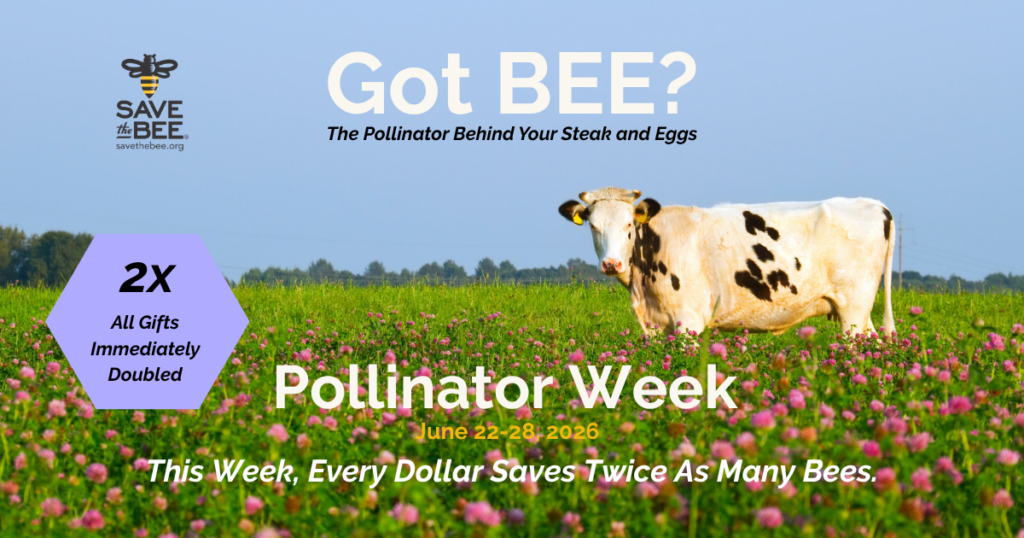
Because if you enjoy a steak, a hamburger, a glass of milk, a scoop of ice cream, a slice of cheese, or even a plate of scrambled eggs, there’s a good chance a bee helped make that meal possible.
Not directly. But critically.
One of the most important forage crops in North America is alfalfa.
Alfalfa is a protein-rich feed used by ranchers and farmers to support cattle, dairy cows, sheep, goats, and other livestock. Millions of acres are grown across the United States every year, and while producing alfalfa hay doesn’t always require pollination, producing the seed needed to grow future alfalfa crops absolutely does.
That’s where pollinators come in.
Bees are responsible for pollinating alfalfa seed crops, helping ensure future generations of forage that sustain livestock across the country.
The same story plays out with clover, flax, and many other flowering plants used directly or indirectly within animal agriculture.
It’s a connection most of us never see. We notice the ranch.
- The cattle.
- The dairy farm.
- The carton of eggs.
- The block of cheese.
What we don’t see is the flower that came before all of them.
Yet healthy pollinator populations help support healthy forage crops. Healthy forage crops help support healthy livestock. Healthy livestock help support the foods millions of families enjoy every day.
The connection runs deeper than many people realize.
In Oregon, ranching and agriculture are woven into the fabric of our communities. From beef and dairy production to specialty foods and local farmers markets, much of what makes our regional food system work depends on healthy landscapes.
And healthy landscapes depend on pollinators.
This is one of the reasons SAVE the BEE spends so much time talking about food security. Pollinator conservation isn’t simply about protecting bees. It’s about protecting the systems that produce food. Sometimes that food grows directly from a pollinated flower. Sometimes it arrives through the animals that depend on pollinated forage crops.
Either way, the story often begins with a bee.
As Pollinator Week continues, I hope you’ll spend a moment thinking about the connections hidden within the foods you love most. The steak on the grill. The ice cream on a summer afternoon. The cheese on your sandwich. The eggs on your breakfast plate. The milk in your coffee.
Each has a story behind it.
And somewhere near the beginning of that story, you’ll often find a pollinator at work.
Bee Fact of the Day
Alfalfa seed production depends heavily on pollinators. Without bees to pollinate alfalfa flowers, farmers would struggle to produce the seed needed to grow one of the most important livestock forage crops in North America.
Thank you for being part of the hive.
With gratitude,
Eric Mason
Executive Director SAVE the BEE – www.savethebee.org