On the Fourth of July, a lot of us gather around food before we ever look up at the sky.
There are grills going. Coolers packed. Watermelon sliced. Berries in bowls. Corn on the table. Cherry pie, apple pie, lemonade, salads, sauces, spices, and all the small ingredients that make a summer meal feel like a summer meal.
It is one of our great American traditions: food, family, friends, and a table that somehow becomes the center of the day.
But long before that food reaches a picnic blanket, backyard grill, grocery shelf, or restaurant kitchen, another kind of work has already happened. Quietly. Repeatedly. Out in fields, orchards, gardens, and farm systems across the country.
That work is pollination.
And often, the worker is a bee.
That is part of the reason Save the Bee is heading to IFT. At IFT, the food industry comes together to talk about ingredients, innovation, formulation, sourcing, processing, packaging, logistics, and the future of food. These conversations matter. They shape what we eat and how food companies respond to a world where supply chains are under pressure.
But before food can be formulated, manufactured, shipped, branded, or sold, it has to begin somewhere.
For much of what we eat, it begins with a flower.
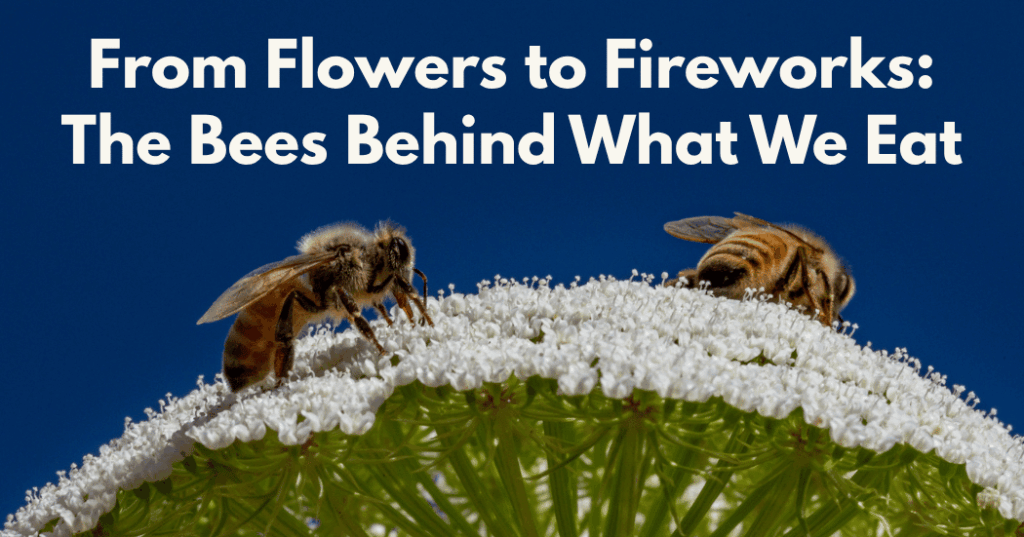
A bee visits that flower, then another, then another. Across farms and landscapes, that small act happens billions of times. Each visit can help a plant set fruit, produce seed, and continue the cycle that leads to a crop. Before the berry is picked, before the almond is harvested, before the melon is sliced, before the spice is blended into a sauce, pollination has already done work the rest of the food system depends on.
In the food industry, we understand labor. We understand logistics. We understand that if one part of a system fails, the whole chain can feel it. If workers do not show up, production slows. If trucks do not move, shelves go empty. If suppliers cannot deliver, manufacturers scramble.
We know food does not appear by magic.
And yet, we sometimes treat pollination as if it happens in the background, separate from the real business of food.
It is not separate.
Pollinators are part of the operating system. They are not a nice-to-have on the edge of agriculture. They help power the beginning of the process. For almonds, berries, apples, melons, seed crops, spices, botanicals, forage crops, and so many other foods and ingredients, bees are doing essential work before the first harvest, before the first purchase order, before the first product run.
That is why ingredient companies should care. The supply chain does not begin at the loading dock. It begins in bloom.
A factory worker turns raw materials into products. A logistics system moves those products where they need to go. A sales team gets them into the market. All of that matters. But bees help create many of the raw materials in the first place.
They are the invisible workforce behind the visible one.
This Fourth of July, that connection is worth seeing. Because the holiday table tells the story better than any chart could. The berries, fruit, nuts, oils, spices, vegetables, beverages, and ingredients we enjoy are tied to living systems most of us rarely stop to notice.
That is also why the pollinator conversation belongs at IFT. Food companies are working hard to build stronger systems. They are investing in traceability, regenerative agriculture, responsible sourcing, cleaner labels, better nutrition, and smarter manufacturing. Those are good and needed efforts. But if we leave pollinators out of that conversation, we leave out one of the most basic forces behind food production itself.
The future of food will not be solved only in labs, factories, or boardrooms. It will also depend on what happens in fields, orchards, and habitats. It will depend on whether the living systems behind agriculture remain strong enough to support the foods and ingredients we depend on.
That is the conversation Save the Bee is bringing to IFT.
Not a soft conversation. Not a symbolic one. A practical one.
If food companies depend on ingredients, and ingredients depend on crops, and many crops depend on pollination, then pollinator health belongs in the center of the food business conversation.
Before the grill.
Before the picnic.
Before the pie.
Before the fireworks.
There was a flower.
And there was a bee doing her job.