The food industry loves technology, and for good reason. Technology and innovation helps us make food safer, more stable, more scalable, more nutritious, and more efficient. At IFT, that conversation is everywhere. New ingredients. Better processing. Smarter packaging. Cleaner labels. Improved texture. Longer shelf life. More precise formulation. Better ways to feed more people with fewer resources.
All of that work matters.
But as SAVE the BEE heads to IFT, we want to make a simple case: one of the most important food technologies ever developed was not invented in a lab, a factory, or a corporate R&D center.
It was developed by nature.
It is pollination.
Long before humans built supply chains, food plants and pollinators were already in relationship. Flowering plants evolved ways to attract insects and other animals. Pollinators moved from bloom to bloom, carrying pollen as they searched for food. Out of that exchange came fruit, seeds, diversity, abundance, and eventually much of the agriculture human beings would learn to depend on.
Then humans noticed.
We noticed honey. We noticed wax. We noticed the hive. We noticed that bees were organized, productive, and strangely mysterious. We climbed trees and cliffs to reach wild honey. We painted those moments on cave walls. We kept bees in clay hives, woven skeps, hollow logs, and eventually modern boxes. Across cultures, bees became food, medicine, trade, ritual, agriculture, story, and symbol.
But here’s the part we still sometimes miss. Our relationship with bees was never only about honey.
Honey was the first thing we wanted. Pollination may be the thing we most needed.
That is where bees become food technology. Not technology in the modern sense of screens, sensors, robotics, and patents. Older than that. Deeper than that. A living technology built on movement, biology, attraction, and exchange. A bee enters a flower. Pollen moves. A plant has the chance to become food.
Simple. And almost impossible to replace at scale.
The food industry can innovate around almost everything that happens after harvest. We can dry, mill, roast, extract, blend, freeze, ferment, stabilize, fortify, package, ship, and market. We can turn crops into ingredients and ingredients into products with astonishing skill. That is the genius of food science.
But food science still needs food.
And food still begins in living systems.
That is why pollinators belong in the IFT conversation. If we are serious about the future of ingredients, we have to talk about the systems that create them. Almonds, apples, berries, melons, citrus, seed crops, spices, botanicals, vegetables, forage crops, and many other foods do not begin with a formulation brief. They begin with reproduction. They begin with a flower ready to become something more.
In that sense, bees are not old-fashioned. They are foundational.
The future may make our food systems more complex. It already has. We are building better greenhouses, vertical farms, data-driven agriculture, precision fermentation, alternative proteins, controlled environment systems, and even food production models for space. NASA is studying how crops can support longer missions, provide fresh food, and improve living environments beyond Earth. The question is not whether technology will shape food. It will.
The question is whether we remember that food is not only an engineering problem.
If we intend to keep growing real food from real plants, whether in Oregon, California, the Midwest, a greenhouse, a rooftop farm, or someday a controlled habitat beyond this planet, we still have to deal with the basic reality of plant life. Many plants need pollination. Many crops need the transfer of pollen to produce fruit or seed. The system can be managed, supported, studied, and improved, but it cannot be hand-waved away.
Yes, some foods can be made in tanks. Some ingredients can be synthesized. Some crops can self-pollinate, wind-pollinate, or be pollinated by hand or machine in limited settings. But a food future built only in laboratories would be a much smaller, thinner, stranger future than most of us want.
We do not just need calories.
We need fruit. Seeds. Nuts. Vegetables. Spices. Color. Flavor. Variety. Nutrition. Culture. Meals that still feel connected to soil, season, place, and life.
That future needs pollinators.
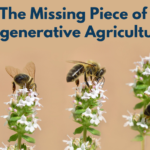
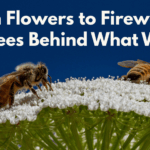
This is the case SAVE the BEE is bringing to IFT. Bees are not a nostalgic symbol sitting outside the serious work of food innovation. They are part of the original food technology. They are biological infrastructure. They are one of the reasons crops become ingredients, and ingredients become the foods people love.
The industry will keep building new tools. It should. We need better science, better systems, and better ways to feed a growing world.
But even the future has roots.
And if we want those roots to keep producing food, we had better protect the wings that help make it possible.