Memorial Day has passed. The grills are out. Gardens are filling in. Kids are out of school. Summer has unofficially arrived.
But for bees, this is not the easy season. Summer is work.
Across Oregon and much of the country, pollinators are entering one of the most demanding stretches of the year. Temperatures climb. Water sources shrink. Bloom cycles change. Habitat pressure intensifies. And in many places, the nectar and pollen available in early spring begin disappearing just as bee populations are peaking.
That tension sits underneath much of the newest research released this year through the Bees of Oregon 2025 reporting from Oregon State University Extension Service, the Oregon Bee Atlas, the Oregon Bee Project, Bee Stewards, and the OSU Honey Bee Lab.
The findings reinforce something conservationists and researchers have been trying to explain for years: there is no single answer to protecting pollinators.
Different bee species need different habitats. Different landscapes face different pressures. And healthy ecosystems depend on long-term stewardship, not just awareness.
The good news is this: people can still make a real difference.
Not through perfection. Not through panic. But through small practical actions repeated across thousands of homes, gardens, neighborhoods, and communities.
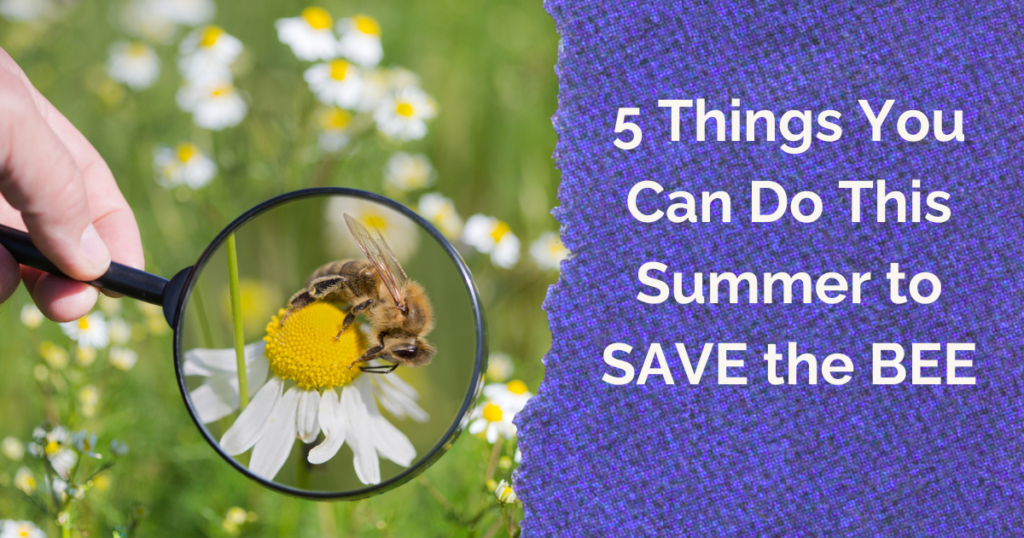
Here are five meaningful ways to help Save the Bee this summer.
1. Plant for the Entire Summer, Not Just Spring
A lot of pollinator gardens look incredible in April and May.
Then July arrives and the food disappears.
That gap matters more than most people realize.
The Oregon research repeatedly points toward forage availability and habitat quality as central issues affecting pollinator health. Bees need consistent access to nectar and pollen across the full growing season, especially during peak summer activity. Some bee species emerge later in the year and depend heavily on late-season bloomers to survive.
This summer, think beyond spring color.
Add plants that continue producing through the hotter months:
- Lavender
- Bee balm
- Goldenrod
- Sunflowers
- Sage
- Yarrow
- Oregon sunshine
- Native asters
- Native milkweed
And don’t underestimate small spaces. A few containers on a patio. A strip of flowers along a fence. One pollinator patch replacing part of a lawn.
That’s still habitat.
2. Let Part of Your Yard Stay a Little Wild
Modern landscaping has trained us to associate “clean” with healthy.
But pollinators evolved in ecosystems that were anything but tidy.
Many native bees nest underground. Others rely on hollow stems, dead wood, dried grasses, brush piles, or undisturbed soil to reproduce and survive. When every inch of a yard gets mulched, sprayed, edged, trimmed, or cleared away, those nesting opportunities disappear.
This summer, consider loosening your grip on perfection.
You can help bees by:
- Leaving small patches of bare soil exposed
- Allowing clover to bloom before mowing
- Leaving some flower stalks standing
- Reducing excessive mulching
- Keeping a small “wild corner” in the yard
It doesn’t need to look abandoned. It just needs to look alive.
3. Reduce Pesticide Use During Peak Bloom – Hit the PAUSE button
Summer is when pollinators are most active.
Unfortunately, it is also when many homeowners and landscapers apply the highest levels of pesticides and herbicides.
The newer Oregon reporting continues to highlight the importance of reducing pollinator exposure during bloom periods. Even common home and garden chemicals can harm bees directly or reduce the flowering plants they depend on.
One of the simplest ways to help pollinators this summer is simply to PAUSE before spraying.
A few practical changes make a difference:
- Avoid spraying flowering plants
- Spray at dusk only if absolutely necessary
- Reduce lawn chemical use
- Pull weeds manually when possible
- Create untreated pollinator-friendly areas
Honestly, we’ve normalized chemically managing landscapes that were never supposed to function like indoor flooring. Pollinators pay the price for that.
4. Support Real Habitat Restoration Beyond Your Backyard
One of the strongest takeaways from the Oregon findings is that pollinator conservation cannot happen only in urban gardens.
Some native bee species depend on highly specialized ecosystems tied to specific native plant communities far outside cities. Those habitats are increasingly fragile and difficult to restore once damaged.
That means protecting bees also means protecting landscapes.
This summer, people can support that work by:
- Volunteering for habitat restoration projects
- Supporting native plant sales and seed programs
- Participating in pollinator counts
- Supporting local land trusts
- Joining citizen science efforts
- Advocating for pollinator-friendly public spaces
5. Support Organizations Working to Save the Bee
Research takes funding. Habitat restoration takes funding. Education takes funding. Advocacy takes funding.
And the newest Oregon research makes something very clear: protecting pollinators is going to require long-term collaboration between scientists, conservationists, nonprofits, farmers, educators, beekeepers, volunteers, and communities willing to stay engaged.
That is why supporting organizations doing this work matters more than ever.
Whether it’s Save the Bee, native habitat organizations, bee research labs, local conservation groups, or pollinator nonprofits in your own community, your support helps fund:
- Pollinator habitat
- Bee research
- Education and awareness
- Advocacy
- Restoration work
- Community engagement
Because awareness alone does not restore ecosystems. Action does. And with Memorial Day behind us the unofficial start of summer may be the best time of year to start.