A worker bee begins her day before most of us are awake. And as tomorrow, May 20, is World Bee Day we thought “a day in the life of a honey bee” was overdue! Let’s jump in…
Inside the hive, thousands of bees move through the dark in organized chaos. Nurse bees feed larvae. Guards patrol the entrance. Honeybees exchange information through movement and vibration. And somewhere near the edge of the colony, a forager prepares to leave.
She’s about half an inch long.
Her brain is smaller than a grain of rice.
And today she may help pollinate hundreds or even thousands of flowers.
The moment she leaves the hive, the work begins.
A honeybee can fly several miles in a single day, navigating using the sun, polarized light, landmarks, scent, and an internal biological clock scientists still don’t fully understand. She moves quickly from flower to flower collecting nectar and pollen, carrying tiny grains between blossoms without any awareness that entire ecosystems depend on what she’s doing.
No applause. No recognition. Just instinct. Work. Survival. And while it may look random from the outside, it’s anything but.
Every flight matters.
The pollen clinging to the hairs on her body may help produce apples in an orchard, blueberries on a farm, cucumbers in a garden, or seeds that allow wildflowers to return next spring. One bee alone can’t sustain an ecosystem. But millions of bees repeating these small acts every day can.
That’s how nature works. Tiny actions stacked together over time.
A healthy hive in midsummer may contain tens of thousands of worker bees, each performing different jobs over the course of their lives. Younger bees clean cells and care for developing brood. Others build wax comb, regulate hive temperature, process nectar into honey, or defend the colony. Foragers often spend the final weeks of their lives outside the hive gathering resources until their wings eventually wear out.
Most worker bees live only a few weeks during peak season. They spend nearly every moment working. And the truth is, most of us rarely think about them at all.
We notice bees when they sting. Or when they show up in a garden. Or maybe when we hear another story about colony losses somewhere far away. But the scale of what pollinators quietly support every single day is hard to overstate.
Much of the food we eat exists because pollinators do invisible work we never see.
So do many of the landscapes we love.
The flowering trees in spring.
The backyard gardens.
The patches of clover buzzing in summer.
The wild edges of trails and open fields that still feel alive.
World Bee Day is tomorrow and like today it’s is a chance to pause and recognize that these systems are not guaranteed. They survive because living things, both large and small, continue doing the work necessary to sustain them.
People are part of that equation too.
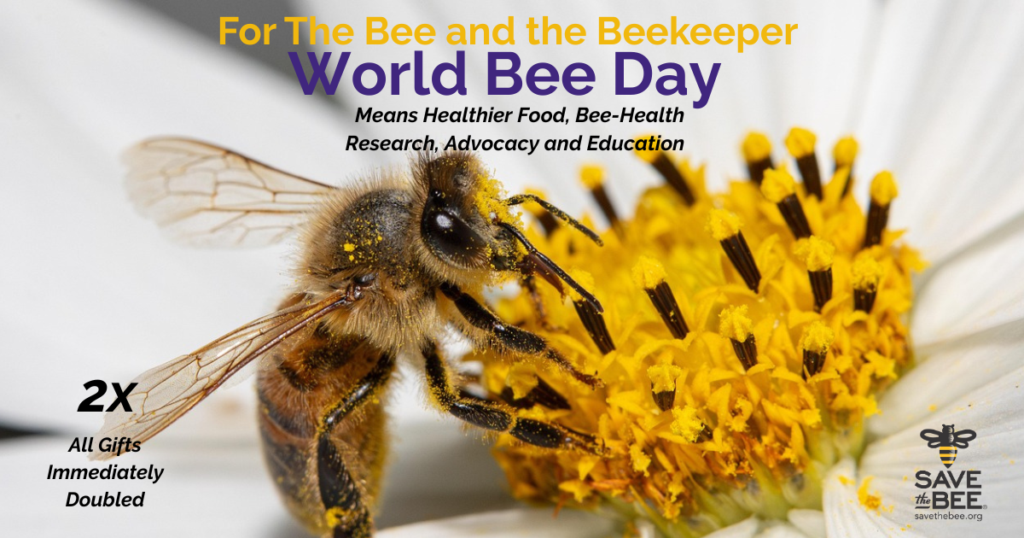
Right now and this week in honor of World Bee Day, every donation made through our World Bee Day double through a 2:1 matching gift until we reach our $5,000 goal.
- A $25 donation becomes $50.
- A $50 donation becomes $100.
- A $100 donation becomes $200 to support pollinator education, awareness, advocacy, and conservation efforts.
Maybe that feels small in the face of a global problem. But ecosystems are built on small acts repeated consistently.
One bee at a time. One flower at a time. One person deciding to help while there’s still time.
Donate today and DOUBLE your impact for bees:
https://givebutter.com/world-bee-day_2026