Something just happened in the Amazon for the first time.
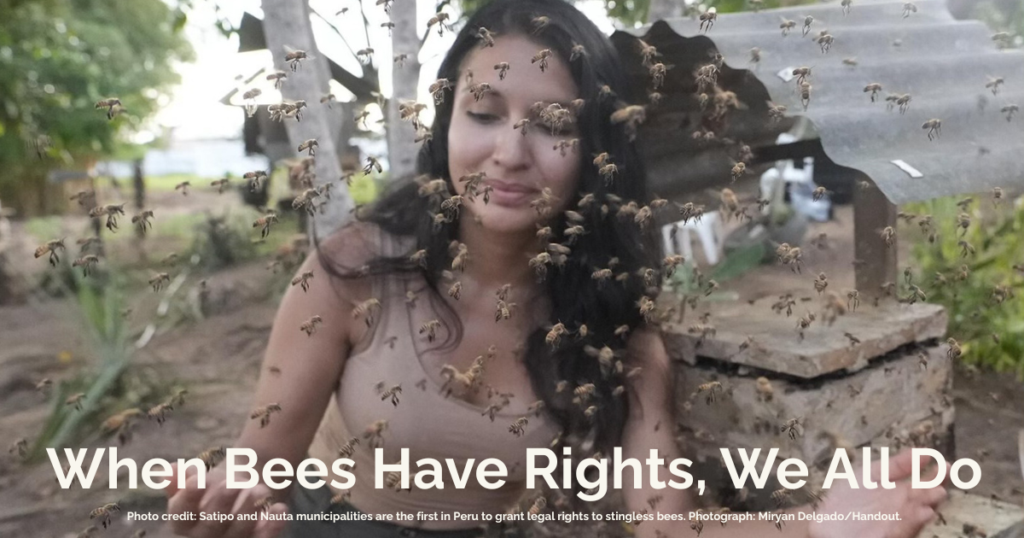
Stingless bees became the first insects on Earth granted legal rights.
Not symbolic ones. Real protection. The right to exist. The right to thrive. The right to healthy habitat.
These bees are ancient. Older than honey bees. Older than most forests we know today.
And they matter.
In the Peruvian Amazon, stingless bees pollinate more than 80 percent of native plants. Cacao. Coffee. Avocados. The backbone of rainforest life and global food chains.
They also carry medicine in their honey. Indigenous communities have used it for generations. Modern science is now catching up, finding antiviral and anti-inflammatory compounds inside something the forest has always known was valuable.
Yet they were disappearing.
Deforestation. Climate stress. Pesticides. And pressure from introduced and aggressive killer bees bred for production, not balance.
People noticed. Elders noticed first.
And communities acted.
Two regions in Peru passed ordinances recognizing stingless bees as rights bearing beings. That means reforestation. Limits on chemicals. Legal standing when harm occurs.
A line was crossed. In a good way.
Now, this isn’t about stingless bees alone. Or Peru.
It’s about how we see pollinators everywhere.
In the US, honey bees face different pressures. Migratory stress. Monocrops. Chemical exposure. Parasites and disease. And let’s not forget the economic strain on beekeepers and the economics of our food systems themselves. Systems that value “honey flavor” or cheap adulterated honey products that ultimately are not good for us, the environment or the bees and other pollinators.
And wild bees in the US, they too are feeling the pressure from habitat loss, climate changes, pesticides and more. For both it’s less about competition than it is about environmental, systems and economic factors we’ve built and worked hard to sustain.
Different context. Same truth.
When pollinators struggle, food systems wobble. Forests thin. Nutrition suffers. Human health follows.
You can’t separate bees from biodiversity. Or biodiversity from people.
This moment in the Amazon reminds us of something basic. Protection works best when it starts with respect. What would change if we treated pollinators like we treat clean air and clean water, with ordinances and guidelines to protect them, and protect those who care and steward them too?
Photo credit: Satipo and Nauta municipalities are the first in Peru to grant legal rights to stingless bees. Photograph: Miryan Delgado/Handout.