In March 2026, something unprecedented will happen at Expo West, the world largest natural foods conference.
For the first time (to our knowledge) in the show’s history, actual livestock will be on the floor of the Anaheim Convention Center at Expo West.
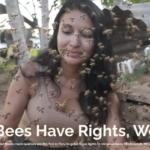
Not cows. Not chickens…BEES!
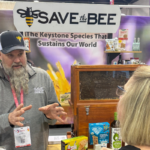
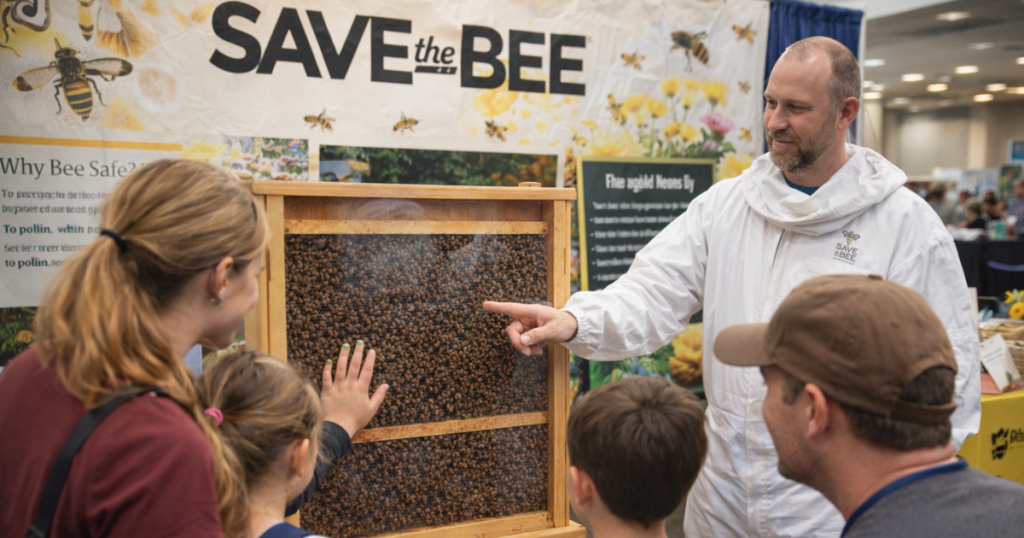
Save the Bee (www.SavetheBee.org) will be exhibiting at Expo West March 4–6, 2026, in Hall C, Booth 2699 D, with a live demonstration beehive. Real bees. Working pollinators. The most essential food producers in nature, onsite.
We’re doing this for one reason.
The food system is under pressure, and bees are telling us first.
Bees aren’t symbolic. They’re structural.
Bees pollinate roughly one-third of the food we eat. That includes fruits, nuts, and ingredients woven into everyday products across the Expo floor.
And yet, their decline is accelerating.
A recent economic analysis estimates up to $219 billion in risk facing US food retailers by 2050, tied to pesticide use on just four crops: corn, soy, apples, and almonds. Once processed, those crops are embedded in more than half of grocery sales.
When pollinators decline, the effects ripple outward. Yields fall. Supply tightens. Prices rise.
Trust erodes.
This is no longer an environmental issue sitting on the margins. It’s a food system issue sitting at the center.
Why live bees, and why now
We could have built another display. Another graphic. Another panel discussion. Instead, we chose something impossible to ignore.
A working beehive.
Because bees are not wildlife (or managed livestock) in this context. They are producers. They are infrastructure.
Bringing live bees to Expo West makes the connection between pollinator health and food resilience immediate and real. You don’t have to imagine what’s at stake. You can see it
Why this matters to Save the Bee
At Save the Bee, we believe change starts with individuals — but it doesn’t end there.
Education and advocacy have to live in two places at once: with people making everyday choices, and within the industries shaping the systems behind those choices.
That’s why we show up in classrooms and communities, on farms and with beekeepers. And it’s why we’re showing up at Expo West.
Food brands, retailers, and ingredient suppliers hold enormous influence over farming practices, sourcing decisions, and what ultimately reaches store shelves. When those decisions shift, landscapes change. So do outcomes for bees, farmers, and consumers.
Bringing live bees into an industry setting is intentional. It’s education where decisions are made. It’s advocacy grounded in reality, not abstraction.
Introducing the Bee Impact Wall
Alongside the live hive, Save the Bee will unveil our Bee Impact Wall.
This installation will visually display the foods and consumer products that rely on pollination, showing just how much of the modern diet depends on healthy bee populations.
It will also surface the cost of failure to Save the Bee.
Many of the products featured at Expo West trace back to pollinator-dependent crops or pesticide-heavy systems. The Bee Impact Wall makes those connections visible and understandable — for brands, buyers, media, and consumers alike.
Why food brands should be paying attention
Retailers are under growing pressure to address pesticide use and pollinator harm. Industry scorecards show progress is uneven, and expectations are rising.
Brands sit in the middle.
Ingredient sourcing.
Supply stability.
Consumer trust.
These are no longer separate conversations. Bee health touches all three.
Featuring your product on the Bee Impact Wall is a way to acknowledge that connection and engage with it openly. It places your brand inside one of the most talked-about exhibits at Expo West, while signaling that you’re willing to be part of a more resilient food system.
An invitation to get involved
Save the Bee will be at Expo West, Hall C, Booth 2699 D, with live bees and a clear message.
The food system depends on pollinators. And pollinators need action, not slogans.
If you’re interested in featuring your product on the Bee Impact Wall, exploring partnership with Save the Bee, or simply coming by to see the hive and start a conversation, we encourage you to reach out early.
Because once you stand next to a working beehive on the Expo floor, the future of food feels very close — and very real.
Interested in participating or learning more? Contact Us at info@savethebee.org or eric.mason@savethebee.org