I’ve heard this line more times than I expected in my nearly 2 years at Save the Bee and during my week at Expo West 2026. It came up in real conversations, often from smart people, thoughtful operators, and more than once from c-suite leaders responsible for entire food brands and product lines. It was usually said with confidence, sometimes with a hint of curiosity more often with an undertone of annoyance, but always with the same underlying assumption.
“Our product doesn’t really connect. We’re not in honey.”
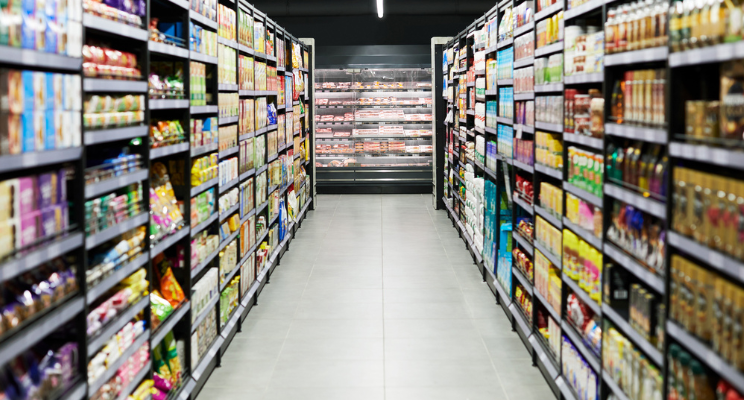
I think understand how we got here. Honey is the most visible expression of what bees produce. It’s tangible. It sits on a shelf. It has a label, a flavor profile, a price point. It’s so popular it’s the 3rd most adulterated product on the planet. I get it! Honey fits neatly into how we think about products and categories. If your business or ingredient list doesn’t touch that shelf, it’s easy to assume bees sit outside your world.
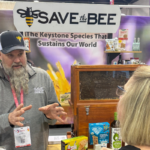
But standing at our booth, with a living hive on one side and the Bee Impact Wall on the other, that idea didn’t hold up for very long.
As the wall filled in over those four days, product by product, something became clear to many who came by. This wasn’t a collection of niche items loosely connected by a theme. It was a cross-section of the modern food system. Snacks, oils, fruits, seeds, botanicals, meat products, supplements, ingredients that start far from a grocery store and long before a brand ever touches them. When you looked at it that way, the throughline wasn’t honey. It was pollination, healthy eco-systems, vibrant farms, economically viable farmers and beekeepers.
And pollination and all the rest doesn’t sit in one category. It runs through everything.
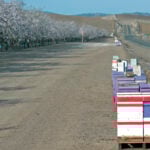
The almonds in a snack bar, the blueberries in a beverage, the seed oils used in cooking, the ingredients that make up flavors, textures, and nutritional profiles. These don’t exist in isolation. They begin in fields and orchards where something has to move pollen from one place to another at the right time and in the right conditions. In many cases, that something is a managed honeybee colony that’s been transported, placed, and cared for with that exact outcome in mind.
Once you start tracing products back to that moment, the idea that bees only matter if you’re in the honey business or have honey as an ingredient (or honey-flavored and honey adulterated ingredient) starts to feel, at best, incomplete!
What I think we’re dealing with isn’t a lack of awareness so much as a kind of misplaced familiarity. We’ve told the story of bees in a way that’s easy to remember but too narrow to be useful. Honey became the shorthand, and over time that shorthand turned into a boundary. If you weren’t inside it, you didn’t have to think much further.
The problem is that the system doesn’t work that way.
If you’re building, selling, or marketing food, you are already part of a chain that depends on pollinators, whether you acknowledge it or not. The responsibility isn’t just to know your ingredients, but to understand what allows those ingredients to exist at all. That requires going one step deeper than most of us are used to going. Past the supplier, past the sourcing story, and back to the biological and environmental conditions that make production possible, and as importantly sustainable, regenerative and healthy.
When you do that, bees show up in places you didn’t expect.
Not as a side note, but as a requirement.
That shift in perspective matters because it changes the conversation from niche and optional to essential. It moves bees out of the category of “nice to support” and into something more foundational. And once that happens, it becomes harder to dismiss the connection with a quick reference to honey and move on.
You start to see that the question isn’t whether your product has anything to do with bees.
It’s whether you understand how much it already does…and always will.