Spring doesn’t arrive gently for a honeybee.
It doesn’t ease in the way it does for us, where we notice a few warmer afternoons and the first signs of green pushing through. For a colony, spring lands all at once, and the margin for getting it wrong is thin. By the time we start thinking about planting gardens or spending more time outside, the work is already underway inside the hive. If these early weeks don’t go well, the rest of the season rarely recovers.
Seen up close, a bee’s spring to-do list is short. But every item carries weight.
1. Rebuild the colony. Fast.
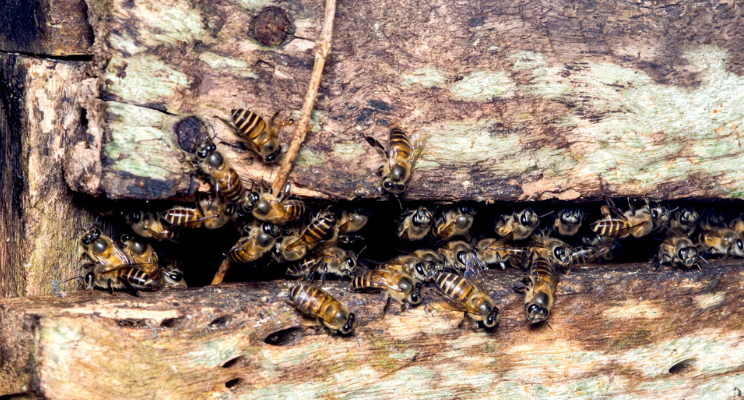
Winter leaves most colonies depleted. Older bees have died off, stores are low, and what remains is just enough to try again. As temperatures rise, the queen begins laying in earnest and the hive shifts into growth mode. Brood needs constant care, warmth, and food. That takes numbers the colony doesn’t yet have, so it has to create them quickly. A slow start here puts everything else at risk.
2. Find food when there isn’t much yet.
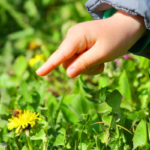
Early spring forage is thin and unpredictable, especially in working landscapes. Bees need pollen and nectar not just to survive, but to fuel rapid expansion. Without it, brood rearing slows and the colony falls behind before the season has really begun. What used to be a mix of flowering plants is now often long stretches of land that offer little until a single crop blooms, and then just as quickly disappears.
3. Show up where they’re needed, whether they’re ready or not.
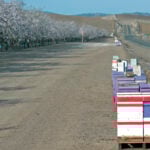
For many colonies, spring begins on the move. Hives are loaded onto trucks and sent to pollinate crops that depend on them. Almonds in California are the clearest example, where most of the country’s commercial bees converge in one place at one time. The bloom is brief. The demand is high. And when it’s over, the bees don’t stay. They’re moved again, chasing the next crop, the next contract, the next window.
4. Navigate exposure while doing the work.
Modern agriculture brings inputs bees can’t avoid. Pesticides, fungicides, and combinations of both are part of the landscape. Some exposures are immediate. Others build over time. Either way, they add pressure to a system already stretched thin. Bees don’t get to opt out. They keep foraging, feeding brood, and supporting the colony in the same conditions.
5. Stay strong enough to keep going.
After almonds, there’s blueberries, cherries, apples, melons. The list continues. Each move adds stress. Each stop demands strength. And somewhere in between, colonies are still expected to produce honey and maintain health. There’s no real pause, no clean reset. Just a continuous cycle of demand that starts here in spring.
When you lay it out like this, it’s hard to see spring as a fresh start for bees. It’s more like a stress test that sets the tone for everything that follows. What happens in these weeks carries forward into pollination across the country, into the strength of colonies later in the year, and into whether beekeepers can recover from another season of losses.
That’s where this shifts from observation to responsibility.
Because while bees carry the load, the conditions around them are something we shape. Habitat. Forage. Research. The support systems that help beekeepers keep going when margins get tight and losses stack up. None of this changes overnight, but it does change with attention and support, especially right now, when the pressure is highest.
If you’ve ever thought about doing something to help bees, this is the moment where it counts. A simple step, a small gift, backing the work that strengthens bees and supports the people who care for them can help steady things when it matters most.
And if you’re wondering what that looks like in practice for you, we’ll walk through that here in our Spring To-Do list for you, because our spring to-do list for you isn’t nearly as hard… but it does matter.